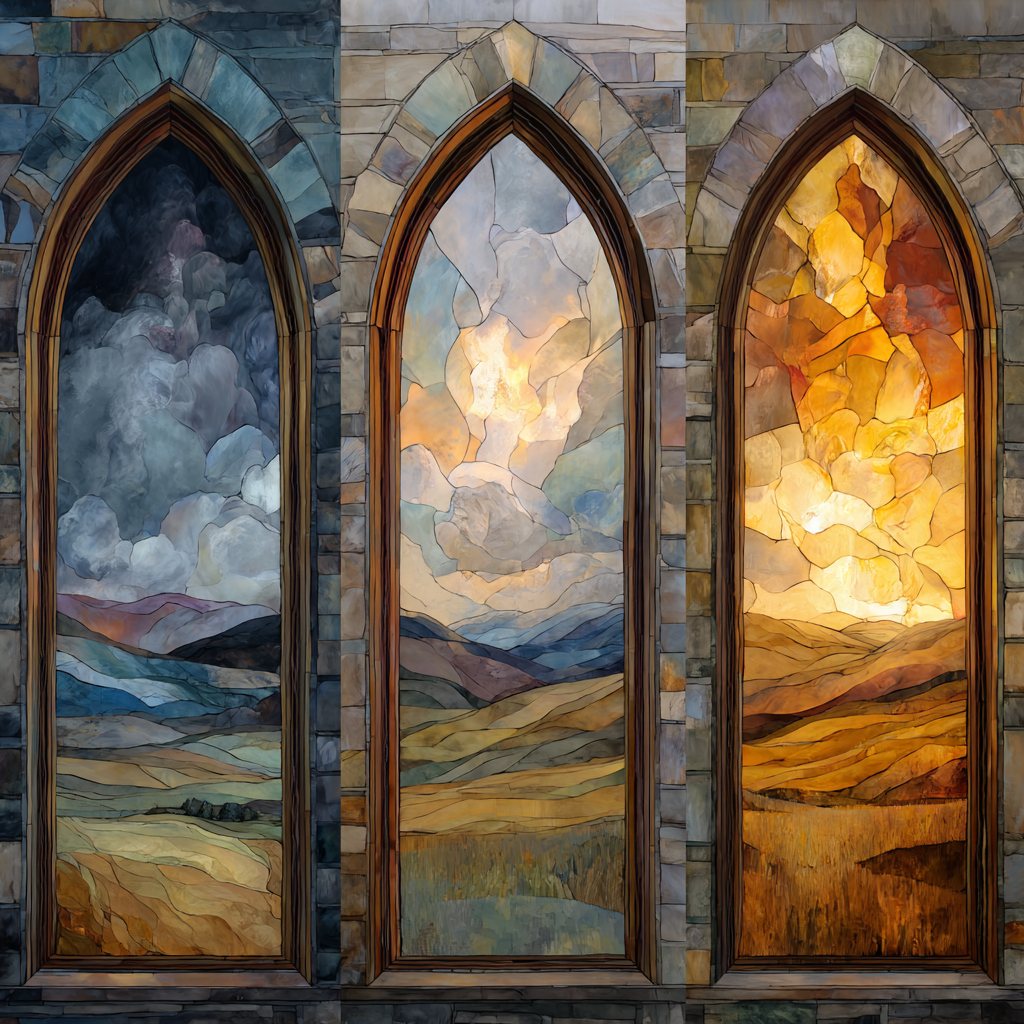
The world is ending. Again.
Browse any bookstore and you’ll find the evidence stacked spine to spine. On the secular shelf, a climate scientist explains that parts of the tropics may be uninhabitable by 2070, while two aisles over an AI researcher confesses he’s not sure we can control what he’s building. The Bulletin of the Atomic Scientists has its Doomsday Clock at 85 seconds to midnight, closer than the Cuban Missile Crisis, the closest it has ever been.1 Astrophysicist Martin Rees gave civilization a 50/50 chance of surviving the century.2 Mainstream publications run headlines about societal collapse the way they used to run headlines about stock prices.
On the Christian shelf, the tone is different but the conclusion is the same. The Left Behind novels sold over 65 million copies, and the theology behind them is less fringe than most pastors will admit.3 Prophecy conferences pack auditoriums. YouTube channels decode current events through the lens of Daniel and Revelation. The assumption underneath all of it is that things will keep getting worse until Jesus comes back to sort it out. The world is a sinking ship, and the gospel is a lifeboat.
But here is what’s strange. Not all Christians read the story this way, and the disagreement is older than you’d think. Augustine believed the kingdom was already here, advancing invisibly through the church. Jonathan Edwards thought the Great Awakening might be the first fruits of a golden age. The Puritans who founded Harvard expected the gospel to conquer the world before Christ returned. These weren’t fringe optimists. They were the mainstream.
Same Bible. Same Jesus. Three very different futures.
Theologians call this the millennial debate, after the “thousand years” mentioned in Revelation 20. What you believe about the future shapes what you do in the present. Your eschatology (your theology of where things are headed) is not a footnote. It is a mission strategy.
The Premillennial Intuition: Evil Is Real and Escalating
If you grew up in an American evangelical church anytime after about 1970, you probably absorbed a picture of the end without anyone formally teaching it to you. Christ returns. Believers are raptured. The world falls apart. A thousand-year kingdom follows. It was in the prophecy charts on the pastor’s office wall, in the Left Behind novels your youth group passed around, in the general assumption that history was a downhill slope.
That picture has a name: dispensational premillennialism. And it has a surprisingly specific origin. John Nelson Darby developed the framework in the 1830s; the Scofield Reference Bible brought it to mass audiences in 1909.4 Most American evangelicals who hold it don’t know this. They think they’re just reading the Bible plainly.
But there’s an older and sturdier version. Historic premillennialism, held by early church fathers like Irenaeus and Justin Martyr, reads Revelation 19-20 as a chronological sequence: Christ descends in chapter 19, the millennium follows in chapter 20.5 No secret rapture. No dispensational architecture. It simply takes the sequence at face value.
What drives this reading is something most Christians feel in their bones, even if their theology says otherwise: evil is not retreating. It is not being gradually tamed. The New Testament’s apocalyptic language, the “man of lawlessness,” the cosmic battle imagery, the rider on the white horse, all of it suggests a world where the forces opposed to God are mounting a final assault. The kingdom comes not through slow transformation but through divine interruption.
And this view takes the experience of the persecuted church seriously. A believer in North Korea, or a Christian family in northern Nigeria watching for Boko Haram, does not experience history as gradual progress. The premillennial conviction that God will personally intervene, that there is a rescue coming, speaks to something real. Any eschatology that cannot look a suffering Christian in the eye and say something true has a problem.
The Amillennial Intuition: Already and Not Yet
The amillennial view (the name is misleading; it doesn’t deny the millennium, it reinterprets it) reads the thousand years of Revelation 20 as a symbol for the present age, the entire stretch between Christ’s first and second comings.6 Christ is reigning now, from heaven. Satan has been bound in the sense that he can no longer prevent the gospel from reaching the nations. But the binding is not total. Evil persists.
This became the dominant view in the church after Augustine’s City of God in the early fifth century, and it never really lost that position.7 Catholic, Orthodox, and Reformed theology all gravitated toward it. The modern version was shaped by a quiet Dutch theologian named Geerhardus Vos, who noticed something in Paul’s letters that now seems obvious but wasn’t at the time: Paul talks as if two ages are running simultaneously.8 The old age of sin and death hasn’t ended. The new age of resurrection and the Spirit has already begun. They overlap. Theologians now call this “inaugurated eschatology,” and it has reshaped how most New Testament scholars read Paul, whether they know Vos’s name or not.
This framework explains how Jesus can say “the kingdom of God is in your midst” (Luke 17:21) and also teach his disciples to pray “your kingdom come.” Both are true at the same time. The kingdom is here. The kingdom is coming. We live in the overlap.
Hoekema and others insist that amillennialism takes the present reign of Christ seriously.9 The church is not merely surviving; it is participating in Christ’s victory. But it does so in a world where the wheat and the tares grow together until the harvest (Matt. 13:24-30). There will be no golden age before Christ’s return. What there will be is faithful presence and the slow, hidden work of the Spirit.
What this view gets right is the texture of actual Christian experience. You bury a saint on Tuesday, baptize a convert on Sunday, and read about a church bombing on Monday morning. The Christian life does not feel like triumphant advance. It feels like a long obedience in the same direction, and on most days the direction is hard to see. Amillennialism honors that whiplash without explaining it away.
The Postmillennial Intuition: The Kingdom Advances
Whatever your theology, the empirical record of the past two thousand years is striking.
Consider just one number: extreme poverty. In 1820, roughly three out of four human beings lived in what we would now call extreme poverty. Today that figure is under 10%.10 That is one of the largest material improvements in human history, and it happened so gradually that almost nobody noticed. Christianity, meanwhile, grew from a handful of frightened disciples to 2.6 billion adherents, and most of that growth is now happening in the Global South.11 Near Lagos, a church auditorium seats 50,000 and fills up every Sunday. In Iran, underground house churches multiply despite criminal penalties for conversion. Whatever else is true, the world is not simply winding down.
These facts do not prove any eschatological position. But they are easier to explain from some frameworks than from others.
Postmillennialism, the third position, agrees with amillennialism that the thousand years of Revelation 20 symbolize the present age. It agrees that Christ is reigning now. Where it diverges is on the outcome. While amillennialism sees good and evil growing in parallel, postmillennialism expects the gospel to succeed overwhelmingly in history. Not perfectly. Not without setbacks. But decisively.
Jesus described the kingdom as a mustard seed: the smallest thing in the garden, easy to overlook, but given time it grows into something the birds nest in (Matt. 13:31-32). He also compared it to leaven, which a woman hides in flour until the whole batch rises (Matt. 13:33). These are not images of rescue or retreat. They are images of quiet, relentless expansion. And Paul wrote that Christ “must reign until he has put all his enemies under his feet” (1 Cor. 15:25). The “must” is present tense. The reigning is happening now.
This was not a fringe position in the history of the church. Keith Mathison and Kenneth Gentry have argued that postmillennialism is the most consistent expression of Reformed theology, pointing out that the Puritans, Jonathan Edwards, and much of the tradition between 1600 and 1850 held some version of it.12 Mathison notes that the distinction between amillennialism and postmillennialism wasn’t clearly articulated until the twentieth century. The difference is not about when the millennium occurs (both say now) but about what the millennium produces.13
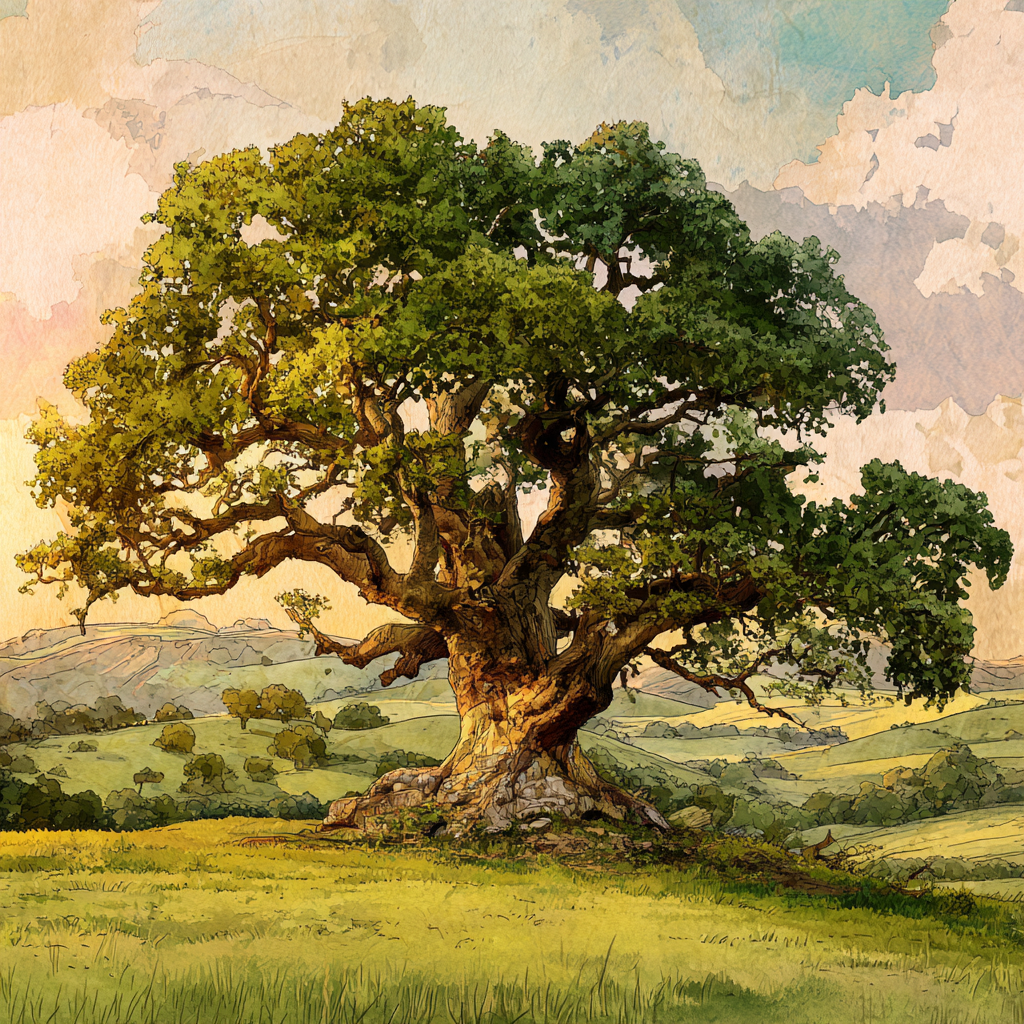
If the kingdom is advancing, then the hospital you build is not a sandcastle waiting for the tide. It is a brick in something God is constructing. And there is something genuinely delightful about that. The postmillennial Christian plants an oak tree. The premillennial Christian wonders why you’d bother.
The Hard Questions
Every view has to face what it cannot easily explain.
Keith Mathison’s critique of premillennialism is sharp enough to fit in a single sentence: the entire system rests on a particular reading of one chapter in the most symbolic book of the Bible.14 Revelation 20 is the only passage in Scripture that mentions a thousand-year reign. Premillennialism requires that Revelation 19:11-16 depicts the second coming and that the visions in chapters 19 and 20 are in strict chronological order. If either assumption fails, the framework collapses.
The amillennial challenge runs deeper. If good and evil grow in exact proportion until the end, what did the cross actually change about the trajectory of history? Christ has all authority, the Spirit has been poured out on all flesh, the gospel is the power of God for salvation, but the expected result is… a draw? The greatest objection to amillennialism is not exegetical but theological: it struggles to articulate what difference the resurrection made to the direction of history, as opposed to the destiny of individual souls.
Postmillennialism has to answer for the twentieth century, and should not pretend this is easy. Two world wars. The Holocaust. Stalin’s purges. Mao’s Cultural Revolution. The Rwandan genocide. If the kingdom is advancing, the advance has tolerated horrific evil along the way. Postmillennialism must also account for the decline of Christianity in Europe, the secularization of institutions the church once built, and the stubborn fact that progress is neither linear nor inevitable. Any honest version of this position must grapple with the possibility that God’s definition of “advance” may look nothing like a tidy upward graph. If it did, the cross itself wouldn’t fit on it.
What They Share
All three positions affirm what matters most: Christ will return, bodily and visibly. There will be a resurrection of the dead and a final judgment. Every wrong will be made right. The story ends with God dwelling with his people in a renewed creation.
The debate is about what happens between now and then. But these are differences within a shared confidence: the tomb is empty, the King is reigning, and the last chapter has already been written.
On any given Sunday morning, a woman in Lagos worships in a church that didn’t exist five years ago while a cathedral in Amsterdam hosts a yoga class in its nave. Somewhere in Iran, a family reads the Gospel of John on a phone with the screen brightness turned down. The kingdom is doing something. The question is what: Which of these views best accounts for both the Bible and the world you actually live in?