On 28 February 2026, joint U.S.-Israeli airstrikes killed Ayatollah Ali Khamenei, wounded his son Mojtaba, and decapitated the senior leadership of Iran’s military.1 Mojtaba is now the third Supreme Leader of the Islamic Republic.2 A fragile ceasefire mediated by Pakistan holds only in patches.3 American bombs still fall on Iranian targets. Some American Christians publicly frame the strikes as biblical prophecy fulfilled, and the Military Religious Freedom Foundation has documented more than two hundred complaints about U.S. commanders citing religious justifications for the strikes.4
Iranian Christians, meanwhile, are being arrested as American agents.
There are between several hundred thousand and three million of them, by varying estimates, almost all converts from Islam, almost all gathered in living rooms whose doors have been kicked in by the Islamic Revolutionary Guard Corps more times than anyone is counting. They are the fastest-growing evangelical movement on earth. They are also, right now, the regime’s preferred scapegoats in a war they did not start, do not benefit from, and would not have chosen.
And the house churches are still meeting.
This is their story, and it is older than the war.
The Numbers
The whole point of an underground church is that you can’t easily count it.
A 2015 academic census put the number of Muslim-background believers in Iran around 100,000.5 Open Doors and other persecution-watch organizations cite figures of 800,000 to one million.6 Higher estimates from advocacy groups like Elam Ministries reach as high as three million.7 The true number is unknowable. People who gather in secret living rooms to worship a banned God do not fill out census forms.
What is knowable is the trajectory. Twenty years ago, scholars estimated between 5,000 and 10,000 Christian converts from Muslim backgrounds in all of Iran.8 Whatever the current number is, the growth rate is steep. Operation World has identified Iran as the world’s fastest-growing evangelical movement, with an average annual growth rate of 19.6 percent.9
Nineteen percent per year. In a country where converting from Islam can get you killed.
Christianity Has Been Here Before
Most Westerners think of Iran as exclusively Muslim. It isn’t, and it never has been entirely so.
Christianity reached Persia within decades of Pentecost. By the second and third centuries, Christian communities were established along the trade routes linking Mesopotamia to the broader Near East.10 The Church of the East, with its catholicos seated in Seleucia-Ctesiphon (near modern Baghdad), became one of the largest Christian communions in the world. Between the ninth and fourteenth centuries, it maintained dioceses stretching from the Mediterranean to China.11 Persian Christians translated Scripture, debated theology, and sent missionaries across Central Asia centuries before European explorers reached those same lands.
The Arab conquest in the seventh century began a long, slow decline. The Mongol invasions accelerated it. By the time the Safavid dynasty established Shia Islam as Iran’s state religion in the sixteenth century, Christianity had been reduced to small Armenian and Assyrian minority communities. But it had never completely disappeared.
What is happening now is something different. The new believers are not ethnic Armenians or Assyrians maintaining ancestral traditions. They are ethnic Persians, Kurds, Azeris, and other Iranians converting from Islam. They are, in a real sense, the first major wave of Persian-background Christianity in over a millennium.
What Happened After 1979
Before the Islamic Revolution, Iran under the Shah was a secular autocracy that tolerated limited Christian activity. Protestant missionaries operated openly, if cautiously. A small but growing community of converts existed, along with the historic Armenian and Assyrian churches.
The revolution remade the legal and religious order overnight. Ayatollah Khomeini’s regime imposed sharia as the law of the land. Christian institutions were shuttered. Evangelism became a criminal offense. In the years that followed, the regime demonstrated what it would do to perceived threats:
In 1990, Hossein Soodmand, an Assemblies of God pastor, was hanged for apostasy.12 In January 1994, Haik Hovsepian Mehr, superintendent of the Iranian Assemblies of God who had campaigned internationally for the release of a Muslim-convert pastor, was found dead with stab wounds. Within months, two more Protestant pastors, Mehdi Dibaj and Tateos Michaelian, were killed under suspicious circumstances.
The message was clear. The result was the opposite of what the regime intended.
How It’s Happening
There is no single explanation for the explosive growth of Christianity in Iran. Several factors are working simultaneously, and they reinforce each other.
Satellite Television and Digital Media
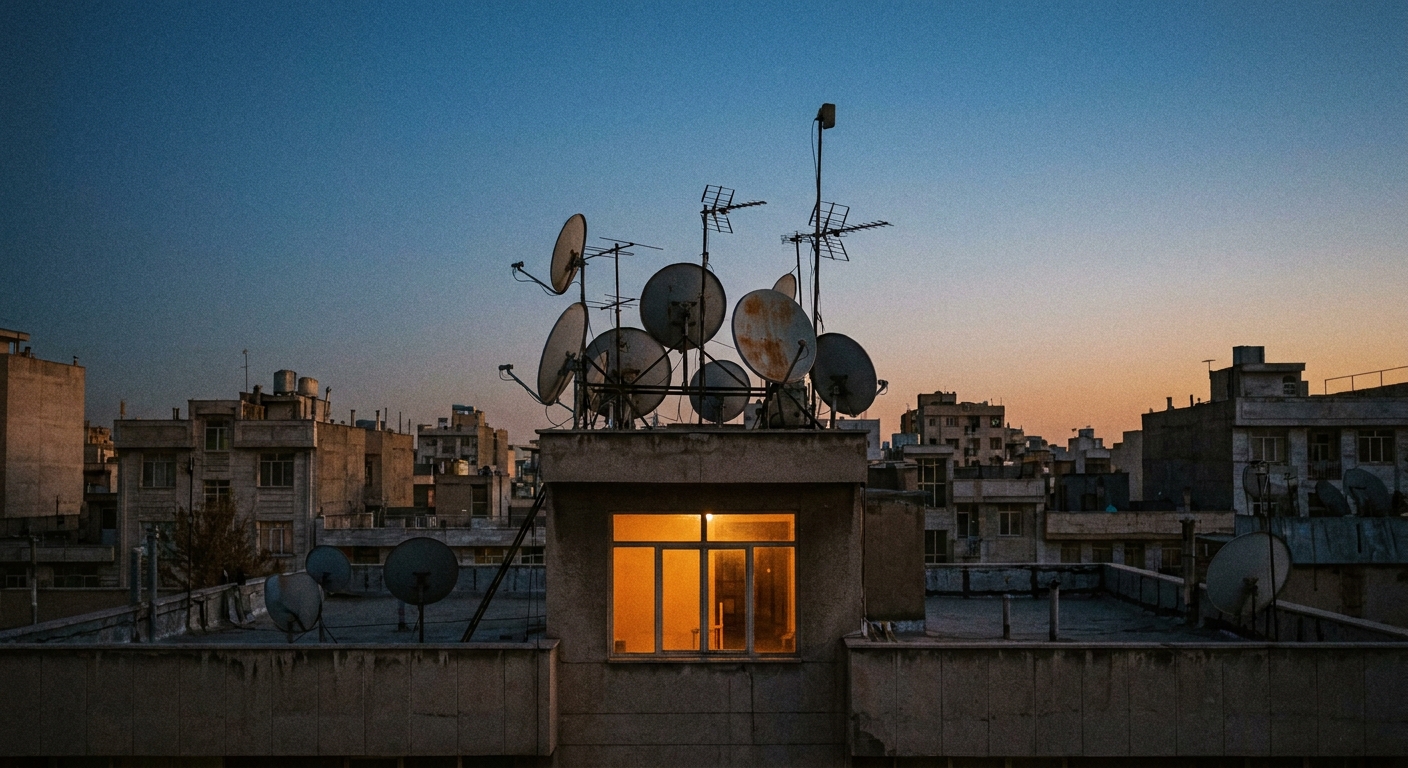
SAT-7 PARS broadcasts 24 hours a day in Farsi, beaming directly into Iranian homes via satellite.13 The channel reaches an estimated ten million viewing households in Iran after launching on the Yahsat satellite.14 The Iranian government periodically sends teams to confiscate satellite dishes from rooftops. Residents reinstall them within days. Other Farsi-language Christian broadcasters operate as well.
During the COVID-19 pandemic, online Bible studies and discipleship programs expanded dramatically. Nima Alizadeh, a former professional basketball player from Tehran who now leads Iranian ministry from Southern California, saw his online Bible study grow from 40 participants to more than 600, with attendees using fake names and no profile pictures for security.
Social media and encrypted messaging apps have created invisible networks connecting seekers with believers across the country and in the diaspora.
House Churches
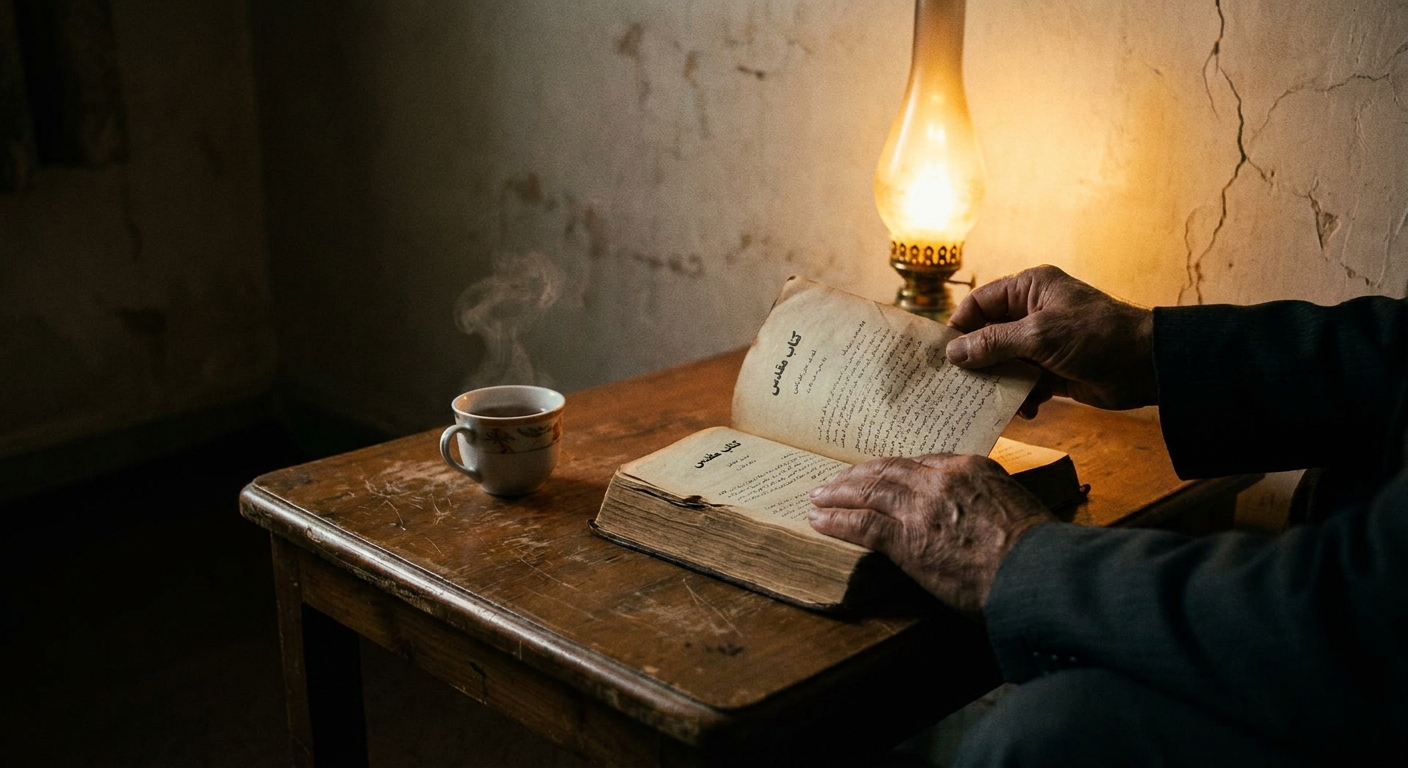
The Iranian church is structurally adapted to persecution. It operates through small groups meeting in private homes, rarely more than a dozen people at a time. If one group is raided, the damage is contained. New groups form organically as converts share their faith with family and friends.
One church planter described how his church began with five members and grew to 45 within a year, then expanded into approximately 25 small groups across 12 cities, resulting in around 500 conversions over two decades. The structure is cellular, decentralized, and remarkably resilient.
Dreams and Visions
This is the part of the story that makes Western evangelicals uncomfortable.
A significant number of Iranian converts report that their journey toward Christianity began with a dream or vision of Jesus. This is not unique to Iran. Researcher J. Dudley Woodberry, surveying former Muslims who came to Christ, found that more than one in four (27 percent) reported a dream or vision before their conversion, with even higher percentages reporting them during conversion or afterward.15
These dreams do not typically function as standalone conversion events. Researchers consistently report that they serve as an initial disruption, breaking down barriers formed by a lifetime in Islamic culture, and that the person then encounters the actual gospel through a believer, a Bible, or a broadcast. The dream opens a door. The Word walks through it.
There may be no tidy systematic theology for this. But the God of Acts has always been willing to use extraordinary means to reach people who have no ordinary access to the gospel. The Magi followed a star. Cornelius saw an angel. Paul was blinded on a road. Whatever is happening in Iranian bedrooms at 3 a.m., the fruit is people reading Scripture, gathering in house churches, and confessing Christ at the risk of their lives. That fruit can be evaluated.
Diaspora Networks
An estimated 87,000 Iranians live in Southern California alone, many of them having arrived after the 1979 revolution. Iranian Christians in the diaspora maintain connections with family and friends inside Iran, creating channels for the gospel to flow back into the country. Students who study abroad encounter Christianity and carry it home. Family members who convert in Los Angeles or London share their faith during phone calls and visits.
Why the Persecution Isn’t Working
The Iranian regime’s own behavior is its worst enemy.
In 2020, the Group for Analyzing and Measuring Attitudes in Iran (GAMAAN) conducted a survey of over 50,000 Iranians, with 90 percent of respondents living inside the country. The results were devastating for the Islamic Republic: only 32.2 percent identified as Shia Muslim. Twenty-two percent chose “None.” Almost nine percent identified as atheist. And 1.5 percent identified as Christian.16
If that 1.5 percent is even roughly representative of Iran’s nearly 92 million people, it implies more than 1.3 million Christians in the country. The GAMAAN researchers acknowledged limitations in their methodology, including an oversampling of educated and internet-connected Iranians. But the gap between the government’s claim that 99.4 percent of Iranians are Muslim and the survey’s finding of 32 percent is so vast that no methodological caveat can close it.
Something has broken.
What broke it is the Islamic Republic itself. Forty-seven years of mandatory religion, enforced by morality police and prison sentences, have produced a generation that associates Islam with hypocrisy, corruption, and state violence. The 2022 protests following the death of Mahsa Amini in morality police custody were the most widespread revolt since the revolution itself.17 Protesters did not use religious slogans. Political scientists observed that the desire for secularism has spread widely among intellectuals, youth, and the urban middle class.18
When the state that claims to represent God behaves like a thug, people stop believing the state’s God is real. Some become atheists. Some become nothing. And some go looking for a different God.
Christianity offers Iranian seekers something the Islamic Republic cannot discredit, because the Islamic Republic has already done its worst to Christianity and Christianity is still there. The faith that the government beats and imprisons and surveils turns out to be the faith people trust. There is a brutal irony in this: the regime’s very persecution serves as an advertisement for the authenticity of the gospel.
The Crackdown Intensifies
The regime is aware that it is losing. The recent escalation in persecution reflects not confidence but panic.
Article 18, a UK-based group that monitors and documents the persecution of Iranian Christians (named after the United Nations human rights clause on religious freedom), publishes an annual census of rights violations in collaboration with Open Doors, Christian Solidarity Worldwide, and Middle East Concern. Its 2024 report documented at least 139 Christians arrested, 80 detained, and 77 formally charged.19 The Islamic Revolutionary Guard Corps raided house churches in at least five cities, interrogated believers, and scrutinized the personal finances of converts and their donors. Iranian courts sentenced 96 of them to a combined 263 years in prison, a sixfold increase over the previous year. Courts also imposed nearly $800,000 in fines and 37 years of internal exile. Five Christians received ten-year sentences each. One received fifteen years. All for the crime of being Christian out loud.
The report was titled “The Tip of the Iceberg,” noting that an estimated 58 percent of cases involving Christians go unreported.
In 2025, the arrests accelerated further: 254 Christians were arrested on charges related to their religious beliefs or activities, nearly twice the 2024 number.20 Seventy-three received prison sentences.
The legal machinery is specifically designed to crush converts. In 2021 the regime amended Article 500 of the penal code to criminalize “deviant educational or proselytizing activity that contradicts or interferes with the sacred law of Islam,” with sentences up to ten years.21 Apostasy itself, though never formally codified, can be punished by death under judicial interpretation of sharia.22 The charge of “acting against national security” is applied to house church leaders and Bible study organizers as if reading the Gospel of John in your living room were an act of espionage. The IRGC has begun investigating Christians’ financial records, looking for any link to foreign funding that could justify harsher penalties.
The world has noticed. The U.S. Commission on International Religious Freedom’s 2025 annual report again recommended Iran for designation as a Country of Particular Concern, ranking it among the world’s worst religious-freedom violators and noting that Iran has the third-highest number of individuals on USCIRF’s documented list of detainees imprisoned for their faith.23 In November 2025, the UN General Assembly’s Third Committee adopted a resolution by 79 votes to 28 condemning Iran’s human rights record, with explicit language on transnational repression and the surge in executions.24 In February 2026, the European Union joined the United States, Canada, and Australia in formally designating the IRGC as a terrorist organization, ending decades of strategic engagement with the regime.25 Iran currently ranks 10th on Open Doors’ World Watch List of countries where Christians face the most extreme persecution, with a score of 87 out of 100.26
And still the church grows.
What the Regime Cannot See
The Islamic Republic looks at Christianity as a Western import, a tool of foreign intelligence services, a virus to be quarantined. This is why they charge converts with “acting against national security.” They literally cannot conceive of someone choosing Jesus for reasons that have nothing to do with America or Europe.
But Christianity reached Persia before Islam did. The Church of the East was sending missionaries to China while most of Europe was still illiterate. When an Iranian encounters Christ, they are not betraying their heritage. They are reconnecting with it.
The regime also cannot see what every student of church history recognizes: that persecution has never once, in two thousand years, succeeded in destroying the church. Not under Nero. Not under Diocletian. Not under Mao. The blood of the martyrs has always been the seed of the church, and Iran is following the pattern with textbook precision.
Two Futures
Article 18’s 2025 annual report, titled Scapegoats, documents how the regime has used the war to intensify its targeting of Christians as foreign agents and Western infiltrators. The IRGC’s “foreign funding” investigations now operate against the backdrop of an actual American war. Every house church becomes, in the regime’s eyes, a potential cell of Western infiltration.
What happens next is unknowable, but two scenarios concentrate the question.
If the regime falls. The Iranian church is positioned to grow faster than almost any church in modern memory. The infrastructure is already built: house churches in dozens of cities, an 87,000-strong Iranian diaspora in Southern California alone, satellite ministries broadcasting Farsi gospel content, decades of underground discipleship networks. The population is primed: forty-seven years of quiet defection from Islam, 22 percent already identifying as “None,” and a Christian floor growing at nearly twenty percent a year under maximum suppression. Remove the suppression and the floor becomes the ceiling. The closest historical parallel is Korea after the Korean War, when an underground church flooded into the open and a generation later defined Asian Christianity. The challenge is not whether the church grows but discipleship at scale: a small persecuted core suddenly responsible for catechizing a country far larger than itself, fast.
If the regime stays. The Islamic Republic survives the war diminished, vassalized, and visibly mortal. Mojtaba lacks his father’s revolutionary credentials and clerical authority. The 1.5 percent of Iranians who already identify as Christian would likely double within a few years. The 22 percent who chose “None” in the 2020 GAMAAN survey are still looking for something. The regime would keep arresting Christians, but with less conviction and less popular consent. The house churches that survived two Supreme Leaders and a war would keep meeting.
Neither scenario stops what is already happening. The Iranian church grew from a few thousand to over a million during forty-seven years of dictatorship and through the worst of the persecution. It will keep growing whether the bombs stop or continue, whether the Khamenei dynasty holds or falls. The kingdom does not require Iran’s government to permit it. It never did.
Acts in Real Time
At first glance the Iranian church looks like a story about suffering. It is that. But it is primarily a story about victory.
The Book of Acts describes a community that was beaten, imprisoned, scattered, and hunted. It grew. The authorities could not understand why. They tried harder. It grew faster. The apostles kept preaching. The converts kept converting. The empire that crucified Christ eventually knelt before Him.
Iran is living that story right now. A regime that controls the courts, the prisons, the police, the media, and the mosques cannot stop people from meeting Jesus in their living rooms. Cannot stop satellite signals. Cannot stop a faith that spreads through whispered conversations and encrypted messages and, if the reports are to be believed, dreams.
Scholar Ladan Boroumand, co-founder of the Abdorrahman Boroumand Center for human rights in Iran, puts it plainly: “Iran today is witnessing the highest rate of Christianization in the world.”27
There is a temptation, when you encounter a story like this, to sentimentalize it. To make it into a feel-good missions report. Resist that. Real people are in prison right now. Real families have been torn apart. Real converts have fled their country with nothing. The cost is enormous, and it is being paid by people whose names most readers will never know.
But the cost is being paid. And the kingdom is advancing. In the hardest soil on earth, the mustard seed is growing into a tree. No government permission required.